How We Deliver Captioned Photos for CGI Within Minutes
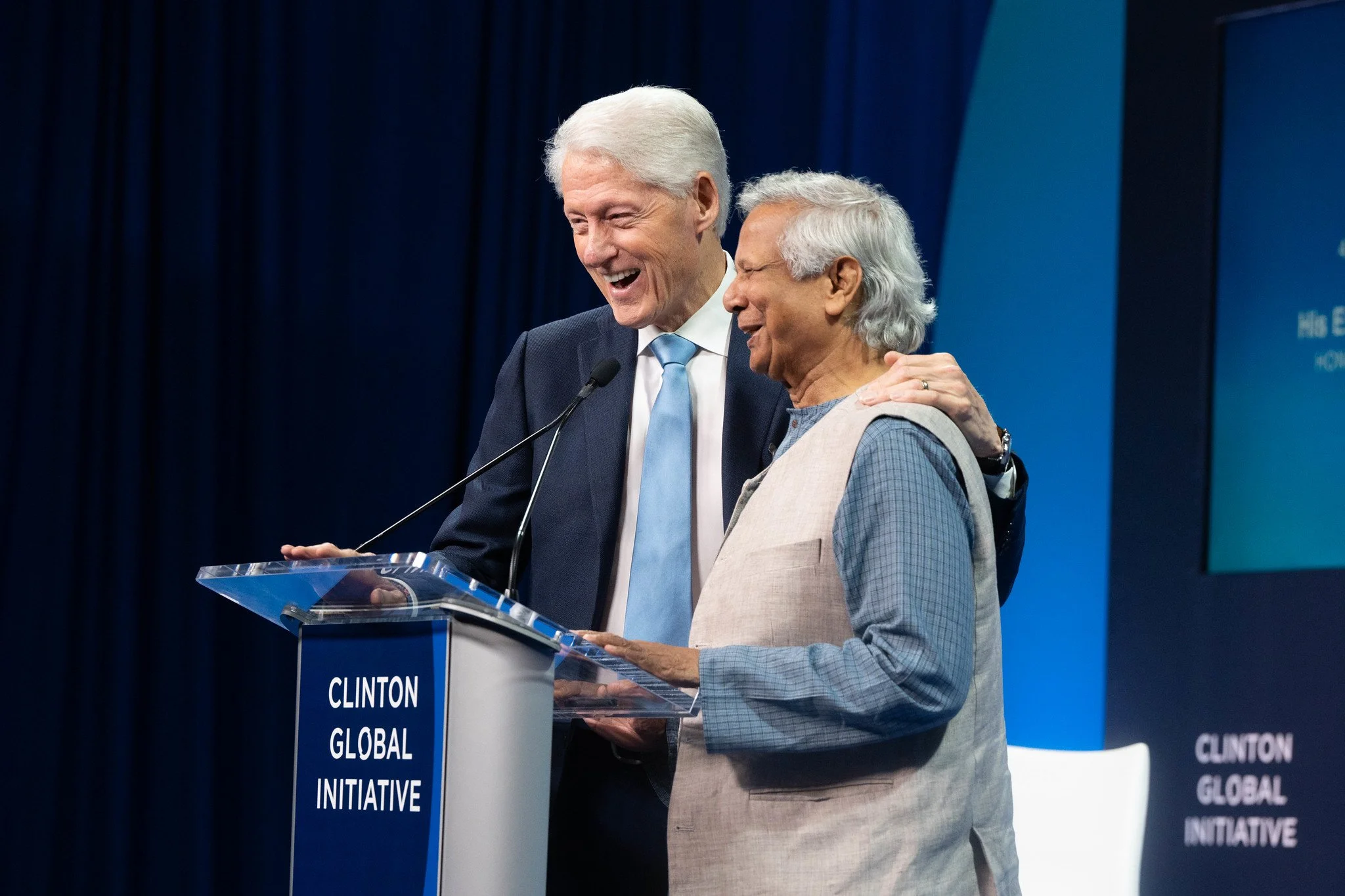
Photo by David Scott Holloway for the Clinton Foundation
At high-profile events, a photo delivered tomorrow is often a photo wasted. The press and social cycle moves in minutes. The Run With It Productions team doesn’t just bring cameras to an event; we deploy a newsroom infrastructure designed for real-time execution.
Here is the exact workflow we use to move thousands of assets from camera card to distribution while the event is still happening.
1. The "Pre-Game" Build (The Airtable Backend) We don't rely on luck; we rely on data. Before we arrive on site, we run a custom script against our production schedule in Airtable. This generates our entire folder structure and metadata backbone before a single photo is taken.
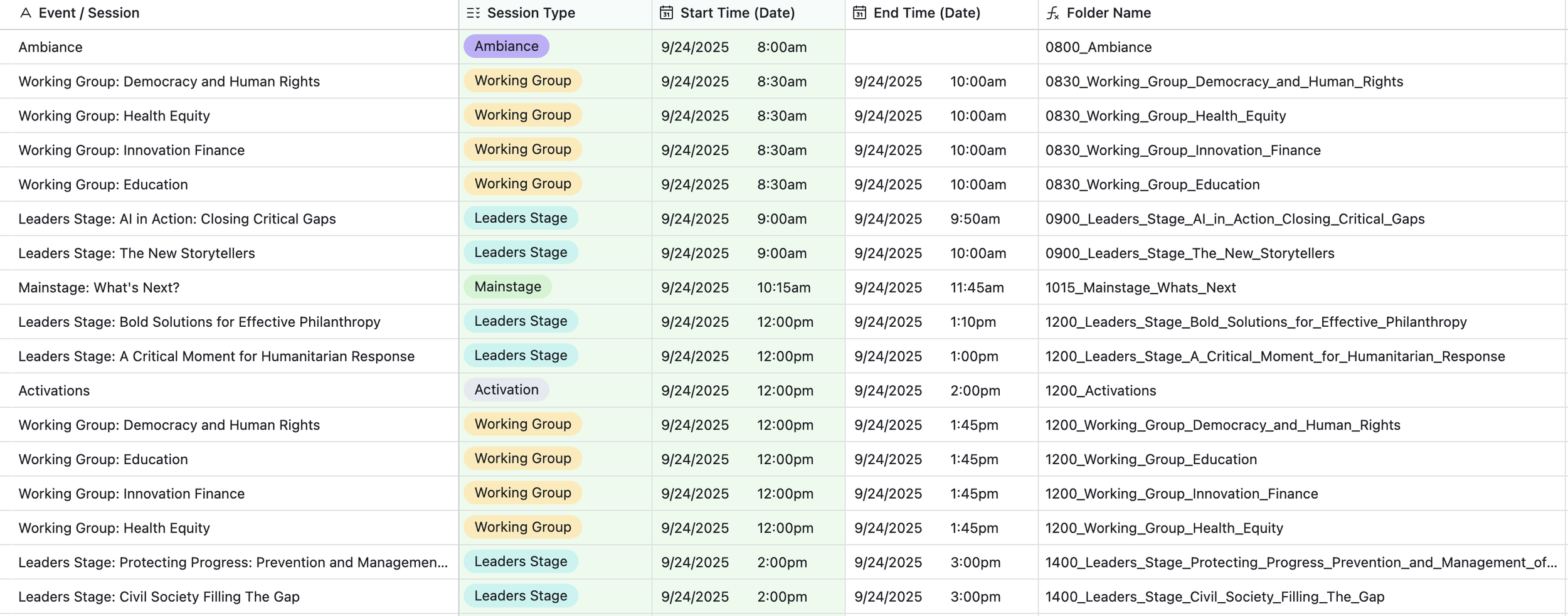
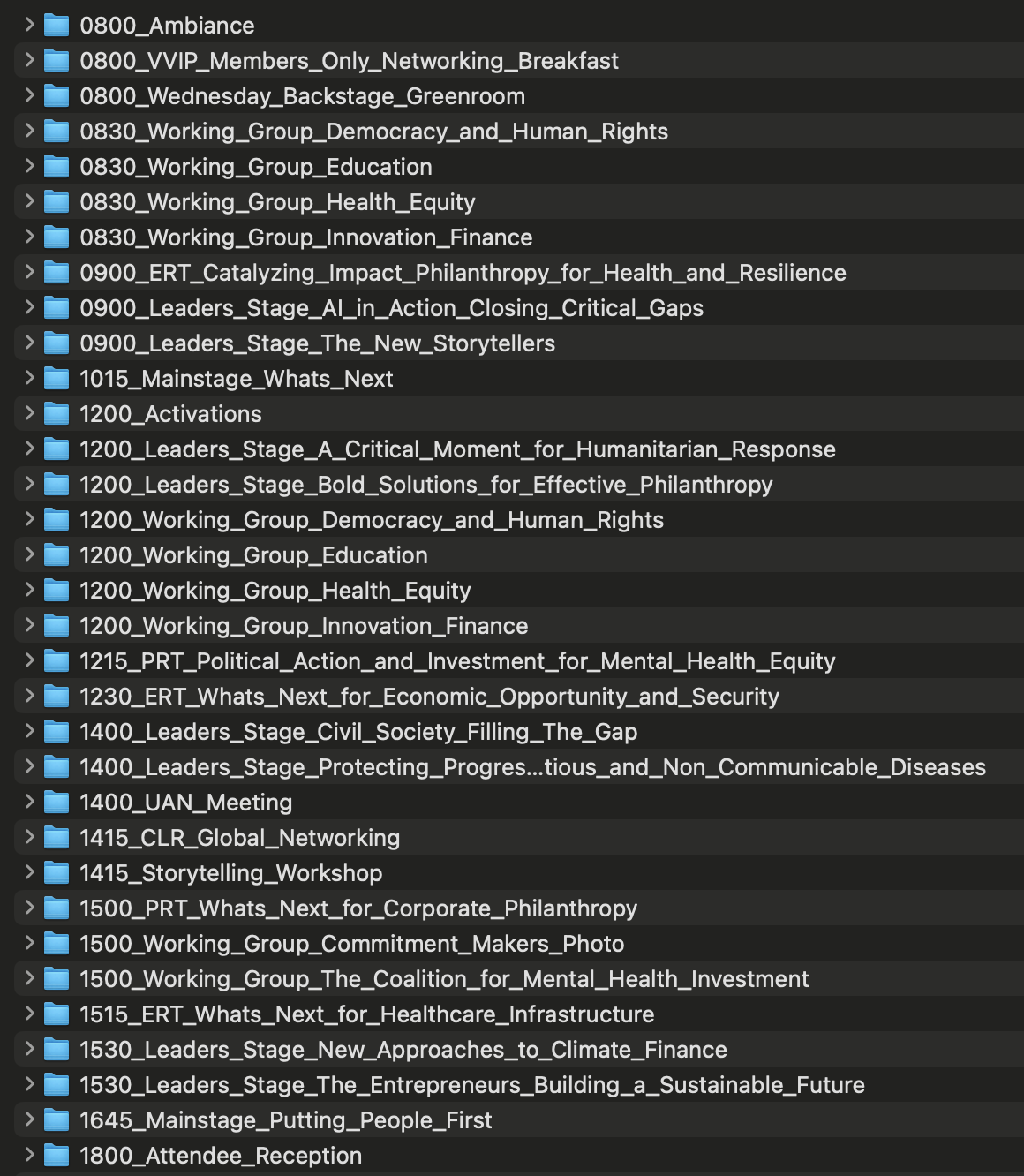
We name every folder using a strict 24-hour military time prefix (e.g., 0900_Opening_Session, 1300_Luncheon, 1730_Reception).
Why? Computers sort numbers, not concepts. By using military time, 1300 (1:00 PM) always sorts naturally after 0900 (9:00 AM) in every file system. If we used "1 PM", it would sort before "9 AM", breaking our chronological timeline.
Military Time Organization FTW: We name every folder using a strict 24-hour military time prefix (e.g., 0900_Opening_Session, 1300_Luncheon, 1730_Reception).
Why? Computers sort numbers, not concepts. By using military time, 1300 (1:00 PM) always sorts naturally after 0900 (9:00 AM) in every file system. If we used "1 PM", it would sort before "9 AM", breaking our chronological timeline.
Pre-Baked Metadata: We generate Photo Mechanic hot code files for every single session. These files contain the specific keywords, event descriptions, and generic captions for that session.
2. The Ingest Station: "Air Traffic Control" Our on-site ingest team is the heartbeat of the operation. Their job is speed and control.
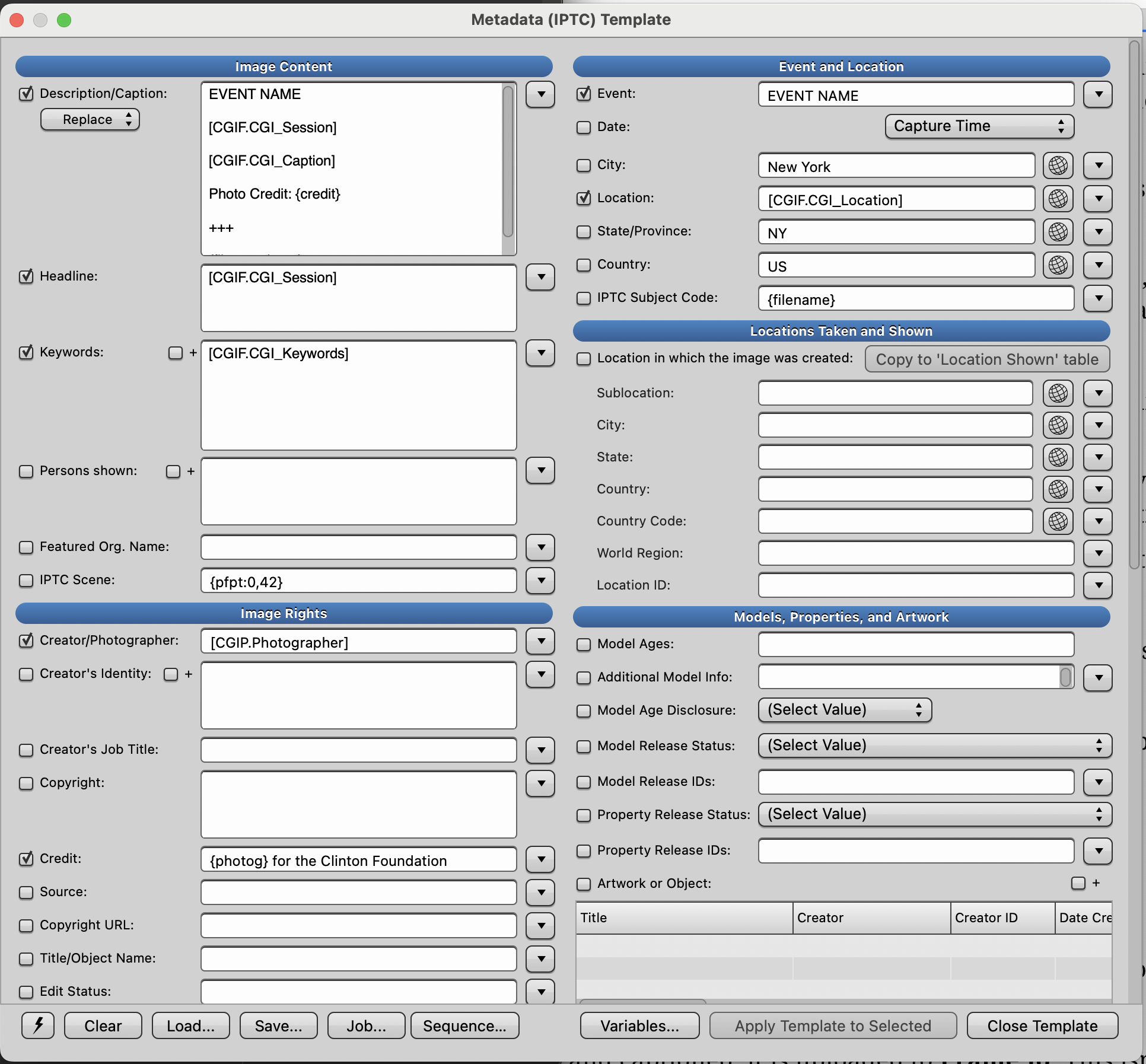
Hot Codes & Code Replacements: This is our secret weapon. By using the hot code files generated from our Airtable data, we can populate 90% of the IPTC data (Headline, Caption, Keywords, Location) based on the folder the photos are living in.
We rely on the image’s {parentfolderpath} variable for Photo Mechanic to know which hot codes to use.
The Handoff: Photographers hand off cards periodically. We rely on Photo Mechanic to ingest and sort by photographer, based on the serial number of their camera, to a primary SSD and a backup NAS via 10GBE connections simultaneously.
The Rename: Files are immediately renamed using a strict convention (YYYYMMDD_EventName_PhotographerInitials_RandomSequence) to prevent filename conflicts later.
3. The Edit: "Newsroom Style" Our editors use Photo Mechanic for high-speed culling. We look for the moment.
Hot Codes & Code Replacements: This is our secret weapon. By using the hot code files generated from our Airtable data, we can populate 90% of the IPTC data (Headline, Caption, Keywords, Location) based on the folder the photos are living in.
We rely on the image’s {parentfolderpath} variable for Photo Mechanic to know which hot codes to use.
4. The Publish: "Headless" Automation Once an image is rated and captioned, it is uploaded to Frame.io. This isn't just for storage—it's our launchpad. When an editor or stakeholder marks a file as "Approved" and “Publish Now” in the metadata, our custom automation (built on n8n and Cloudflare) routes the high-res asset to Flickr (for public) and Widen (for internal archives) simultaneously.
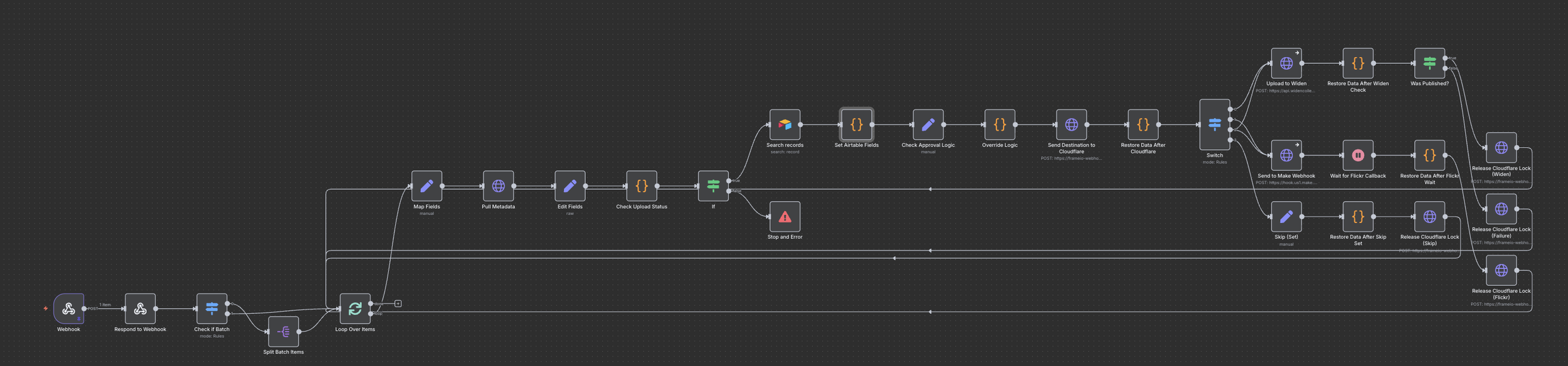
A peek at our N8N workflow that publishes from Frame.io to Widen and Flickr for the Clinton Foundation.
Curious what this would look like for your event?
We build delivery pipelines that integrate with your DAM, approval process, and publishing needs—tailored to your scale, timeline, and budget.